













College football is rarely short on off-field intrigue, and even as the new season looms, a peculiar controversy has surfaced involving one of the sport’s recent icons. Jayden Daniels, the Heisman Trophy-winning quarterback who transitioned from LSU to the NFL, is currently embroiled in a dispute with his former university over jersey numbers and Name, Image, and Likeness (NIL) rights.
Recent reports indicate that legal representatives for Daniels issued a cease-and-desist letter to LSU. The core of the grievance involves the school’s decision to assign the No. 5 jersey—the same number Daniels wore during his historic tenure in Baton Rouge—to sophomore defensive back DJ Pickett. The legal move suggests that LSU no longer has the authorization to utilize Daniels’ likeness in certain capacities while his former number is being actively worn by another player.
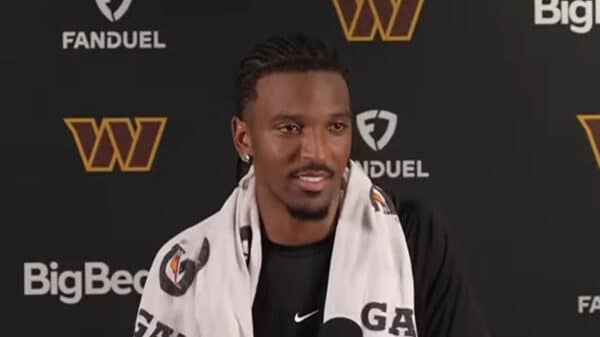
While the legal posturing is significant, many observers view this as a battle that may cause more reputational harm than financial gain. Daniels’ mother, Regina Jackson, who manages much of his professional business, is widely believed to be the driving force behind this confrontation. However, Daniels himself appeared to attempt some damage control via social media, suggesting a desire to move past the distractions as he begins his professional career with the Washington Commanders.
“I have been locked in on training camp and that’s been my number one focus,” Daniels shared on Instagram. “I have a lot of gratitude for my time at LSU and I’m proud of what my teammates and I accomplished there. Obviously there are issues to be worked out between my team and LSU and my hope is that it will get done privately. My sole personal focus is on Commanders’ football. I realize the business of football is unique and I trust this can all be resolved.”
The wording of Daniels’ statement suggests a disconnect between the player and his legal “team.” While he focuses on recovering from an elbow injury and preparing for the NFL, his representatives are fighting a battle over optics that has now become public fodder. The leak of the cease-and-desist letter highlights a potential misunderstanding of leverage in the modern NIL landscape.
This situation also sheds light on the shifting dynamics between elite transfers and the programs they represent. Daniels, who began his career at Arizona State, spent a limited but highly productive time at LSU. For him, the relationship was largely transactional: he delivered a Heisman Trophy, and LSU provided the platform for him to become a top NFL draft pick. Unlike Joe Burrow, who led the Tigers to an undefeated national championship and remains a legendary figure in Louisiana, Daniels’ legacy is viewed more through an individual lens. This distinction seems to be at the heart of the current friction.
A Recurring Narrative Surrounding the Daniels Camp
This isn’t the first time the management around Daniels has clashed with a university. During his time at Arizona State, the program faced scrutiny and eventually severed ties with Jackson following allegations regarding recruiting violations during the 2020 COVID-19 dead period. This history adds a layer of complexity to the current standoff at LSU.
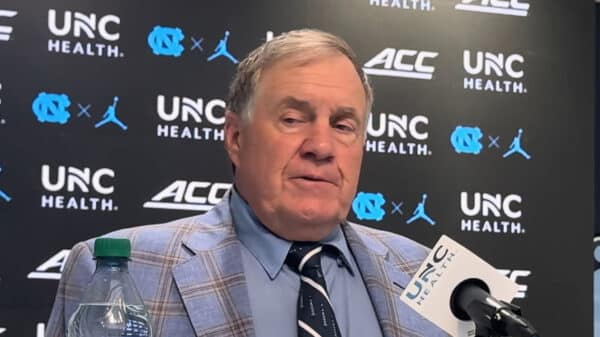
Regarding the jersey number, LSU head coach Brian Kelly reportedly promised Pickett the No. 5 during his recruitment. However, the school initially hesitated to issue the number without a nod of approval from Daniels. The sensitivity stems from how LSU has handled Joe Burrow’s No. 9, which has effectively been kept out of rotation since his 2019 championship run.
Sources suggest that Daniels feels he deserves the same “retired” treatment as Burrow. Yet, the contexts are different: Burrow’s season was a collective triumph for the ages, whereas Daniels’ 2023 campaign—while statistically magnificent with 50 total touchdowns—came during a three-loss regular season. Kelly noted to media that he was hesitant to treat the two Heisman winners differently but eventually felt obligated to honor the promise made to Pickett.
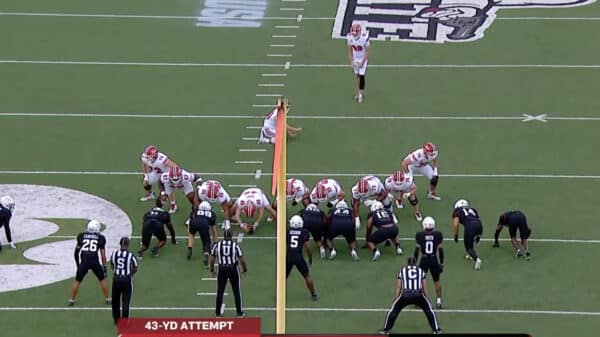
The coaching staff’s decision to finally give Pickett the No. 5 was rooted in recruiting integrity. Pickett, a vital part of the Tigers’ secondary, had worn the number since his youth and made it clear it was a deciding factor in his commitment to the school. Pickett expressed his respect for Daniels during a recent press conference, noting he wished him well while emphasizing that he was simply wearing the number he was promised.
The Intricate Nature of Jersey Number Traditions
Managing jersey numbers in college football is a logistical nightmare. With rosters exceeding 100 players and only 99 available numbers, “double-numbering” players on opposite sides of the ball is a standard necessity. Completely retiring a number is a luxury that few programs can afford without causing roster issues.
LSU has specific bylaws regarding retired jerseys, allowing coaches some discretion for numbers retired after 2007. The school has a storied history with specific numbers, most notably No. 7 and No. 18. The No. 7 is typically reserved for the team’s most explosive playmaker, while No. 18 is awarded to a player who demonstrates elite leadership. Even these traditions have evolved; for example, star offensive lineman Will Campbell was honored with the No. 7 distinction but wore his traditional No. 66 due to NCAA eligibility rules for linemen.
As it stands, DJ Pickett will continue to wear No. 5 for the Tigers. LSU now faces the challenge of reconciling with one of its greatest individual performers while maintaining the recruiting promises that help build its future. This dispute serves as a reminder that in the NIL era, the bond between a player and their alma mater is increasingly governed by contracts and business interests rather than just sentiment.
Ultimately, this situation reflects the growing pains of the modern collegiate landscape, where the legacies of former stars and the needs of current players often collide. While Jayden Daniels’ achievements at LSU are undeniable, the dispute over a jersey number highlights the difficulty of balancing historical reverence with the practical demands of a 100-man roster. For LSU, the priority remains keeping the current locker room satisfied, even if it means navigating a public legal spat with a Heisman winner.