


Despite enduring a three-decade drought since their last Super Bowl victory and holding the longest active streak in the NFC without a conference championship appearance, the Dallas Cowboys remain an unparalleled titan in the world of sports business. For the seventh consecutive year, “America’s Team” has secured the top spot in Sportico’s NFL franchise valuations, reaching a staggering $15.5 billion—a 22% increase over the previous year. The financial dominance of the NFL is so absolute that only six non-football franchises globally are valued higher than the league’s least valuable team, the Cincinnati Bengals, who sit at $7.4 billion.
An Unprecedented Return on Investment
The transformation of the Cowboys under Jerry Jones is one of the most successful case studies in sports history. Jones acquired the team in 1989 for $150 million, a price that included various unfunded liabilities. Fast forward to today, and the franchise’s value has exploded 100-fold. To put that growth in perspective, the S&P 500 has grown roughly 27 times during that same 35-year window. This trajectory highlights the unique status of the Cowboys not just as a sports team, but as a premier global asset.
Leading the League in Revenue and Profitability
Financially, Dallas operates on a different plane than its peers. The franchise generated $1.3 billion in revenue last year, with Real Madrid being the only other sports organization in the world to surpass that figure. The Cowboys’ local revenue is particularly impressive, nearly 70% higher than that of the second-place Los Angeles Rams. Furthermore, their estimated earnings before interest, taxes, depreciation, and amortization (EBITDA) reached $510 million. This profit margin is double that of the Rams and nearly four times the league average of $139 million.
While many sports teams are valued based on revenue multiples due to inconsistent profitability, the Cowboys are a rare exception. With a valuation at roughly 30 times EBITDA, the team generates enough liquid cash to justify its price tag as a standalone business. In contrast, the average NFL team (excluding Dallas) trades at a much higher multiple of 72 times EBITDA. Industry experts suggest that a minority stake in the Cowboys could even be valued as high as $18 billion to $20 billion in today’s market.
Strategic Independence and Commercial Power
A significant portion of the Cowboys’ financial success stems from their independence. They are the only NFL team that operates outside the league’s centralized merchandise system. This independent retail arm generates nearly $200 million in annual revenue. Additionally, the club’s sponsorship portfolio is the envy of the league, bringing in $300 million annually—nearly double its closest competitor. Recent sponsorship renewals have seen the team triple its previous annual values, proving the enduring power of the Cowboys’ brand.
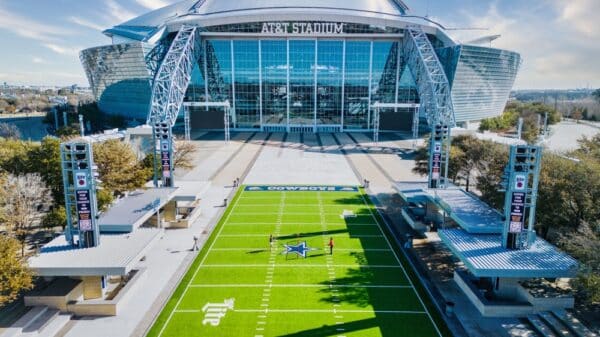
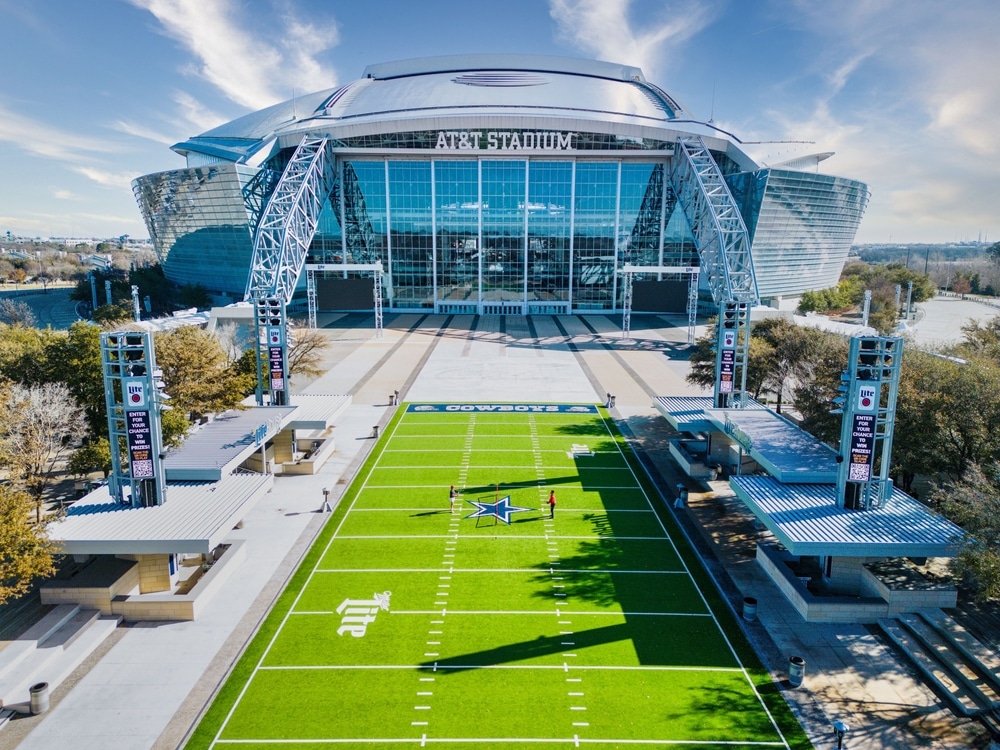
Future-proofing the business has also been a priority. In April, the team secured its future in Arlington by extending the AT&T Stadium lease through 2055. This agreement includes $273 million from the city for stadium upgrades. In preparation for the upcoming World Cup, the Cowboys have also invested $300 million of their own capital into venue renovations for the stadium, which originally opened in 2009.
The Evolution of a Modern Empire
The current prosperity of the NFL and the Cowboys stands in stark contrast to the climate of the 1980s. During that era, the league struggled with labor strikes in 1982 and 1987, competition from the USFL, and limited television revenue. Before the rise of Fox as a major broadcaster, teams averaged only about $15 million annually in TV money. The Cowboys themselves were in a state of crisis by 1989; they were enduring five consecutive losing seasons and losing $1 million per month. At one point, the federal government even held a 13% stake in the team due to the savings and loan crisis.
The early years of the Jones era were marked by a rapid on-field turnaround. After a dismal 1-15 season in 1989, the “Triplets”—Troy Aikman, Emmitt Smith, and Michael Irvin—led a dynasty that captured three Super Bowls in four years during the early 1990s. Off the field, Jones redefined the league’s economic landscape by challenging the NFL’s control over sponsorships and licensing. By striking individual deals with major brands like Nike, Pepsi, and American Express in 1995, he paved the way for teams to maximize their local commercial potential.
This business-first philosophy culminated in the 2016 opening of “The Star” in Frisco. The $1.5 billion, 91-acre headquarters and practice facility serves as a massive real-estate and branding engine, integrating mixed-use development into the team’s core operations. While the roster has seen over 3,000 different players during Jerry Jones’ 35-year tenure, the underlying business has remained consistently at the top of the sports world.
Final Thoughts on the Cowboys’ Business Model
The Dallas Cowboys have successfully decoupled on-field championship success from financial growth. By revolutionizing sponsorship deals, maintaining control over their own merchandise, and aggressively expanding into real estate, they have built a recession-proof brand. Even as the search for a fourth Super Bowl title under Jerry Jones continues, the franchise has already won the ultimate business trophy: becoming the most valuable entity in the history of professional sports. The Cowboys’ ability to maintain a massive valuation premium over the rest of the NFL suggests that their financial crown is unlikely to be challenged anytime soon.