












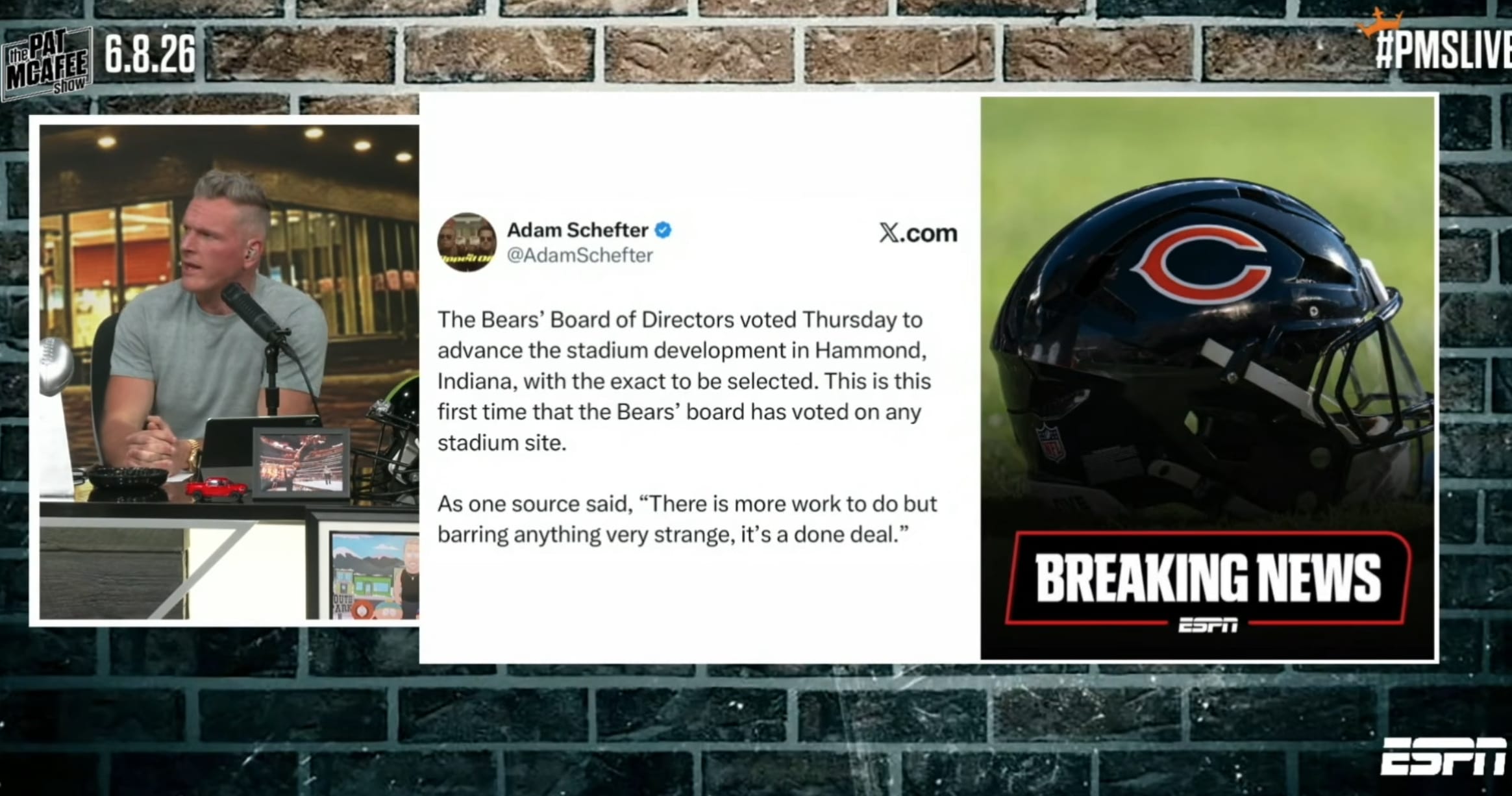

The Chicago Bears’ long-running search for a modern stadium has taken a significant turn toward Northwest Indiana, sparking a debate over whether the franchise is actually leaving or just playing a high-stakes game of poker. Following a recent vote by the team’s board of directors to move forward with a domed stadium proposal at Wolf Lake in Hammond, Indiana, NFL insider Mike Florio has weighed in, suggesting the entire maneuver is a calculated effort to gain leverage over Illinois officials.
Tension Between Insider Skepticism and On-the-Ground Reporting
While Florio views the Indiana interest as a strategic play to force Chicago back to the negotiating table, local reporting paints a more definitive picture. Some insiders have indicated that the Hammond plan is exceptionally close to becoming a reality, suggesting the transition is nearly a “done deal” unless unexpected hurdles arise. This creates a fascinating divide: either the Bears’ leadership is executing a flawless bluff to secure better terms in Illinois, or the city is on the verge of losing one of its most iconic institutions due to a lack of urgency.
The Financial Divide: Indiana’s Billion-Dollar Bait
The core of the conflict lies in the divergent approaches taken by the two states regarding public financing and infrastructure support. The Bears previously committed $197.2 million to acquire a massive 326-acre site in Arlington Heights, but that project stalled amid tax disputes and a lack of support from state leadership. In contrast, Indiana has moved with remarkable speed. Through Senate Bill 27, the state established a Northwest Indiana stadium authority equipped with approximately $1 billion in taxpayer-backed financing.
This billion-dollar commitment changes the nature of the “bluff.” While the Bears might prefer the prestige and market size of Chicago, the financial certainty offered by Indiana makes the Wolf Lake proposal a legitimate and competitive alternative. The franchise is essentially choosing between a difficult path in Illinois and a paved road in Indiana.
Analyzing the Bears’ Quest for Urgency
Florio’s perspective hinges on the idea that the Bears’ ultimate goal is to remain in Chicago under better financial conditions. By publicly flirting with Indiana, the team is manufacturing the pressure necessary to move the needle with Illinois lawmakers who have been criticized for their reluctance to strike a deal. However, this strategy carries significant risks. When a neighboring state provides a fully funded, credible stadium plan, a “threat” to leave can quickly become a reality.
The mounting pressure is not just coming from the team, but from national media voices who have pointed out the potential embarrassment for the city of Chicago. If the Bears do eventually move, it would represent a massive shift in the NFL landscape, turning what many thought was a simple negotiation tactic into one of the biggest franchise relocations in recent history.
Final Thoughts on the Bears’ Stadium Saga
The Chicago Bears find themselves at a crossroads between tradition and fiscal reality. Whether the Wolf Lake proposal is a genuine exit strategy or the ultimate leverage play, the presence of a $1 billion incentive from Indiana has forced the conversation to a breaking point. Chicago must now decide if it is willing to meet the team’s demands or watch its historic NFL franchise cross state lines for a more favorable financial future.